
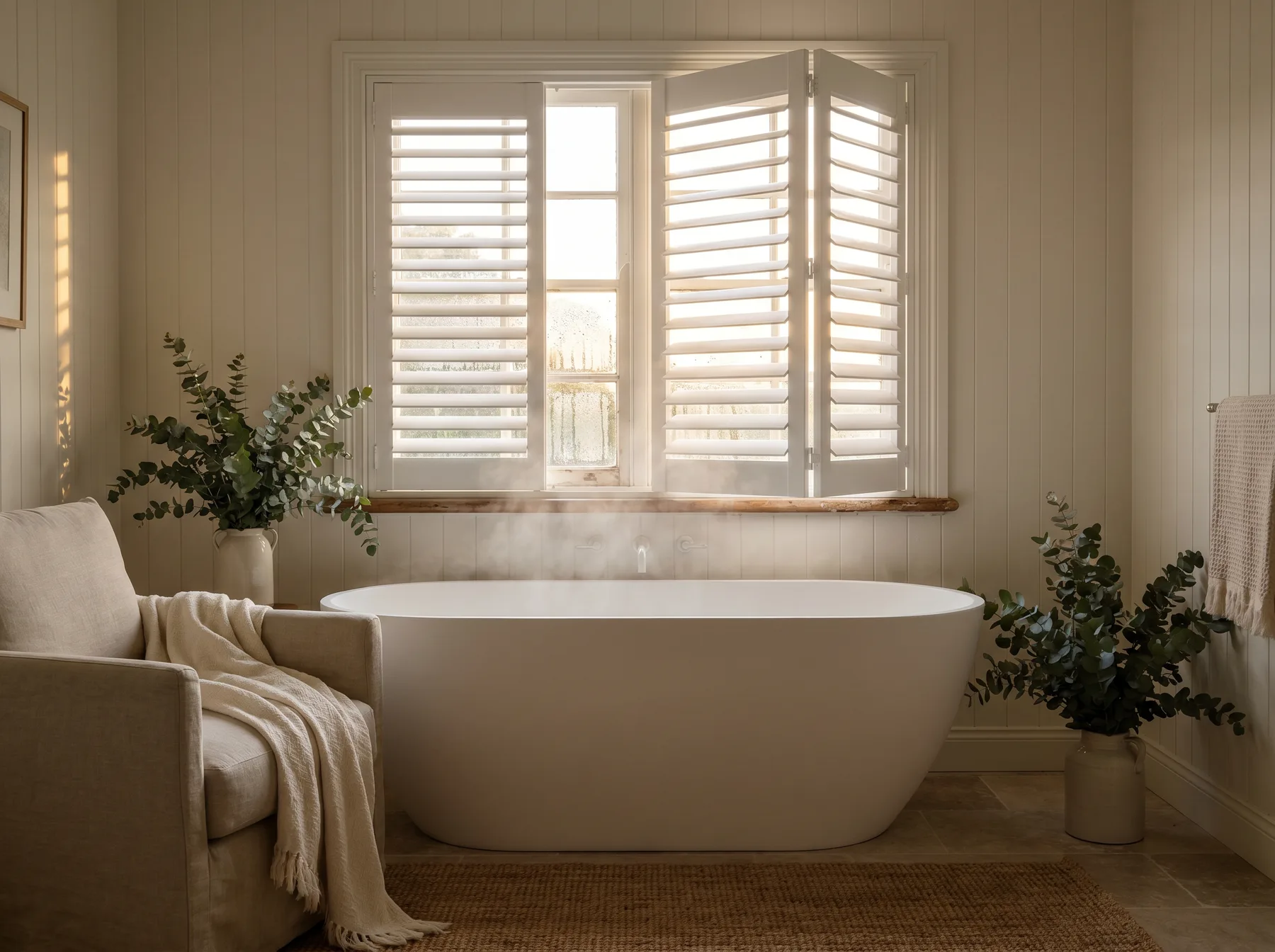
Why the bathroom is its own climate
A bathroom window lives through a rainstorm every morning: steam saturating the air, condensation running the glass, splash reaching further than anyone admits. Add privacy needs (frosted glass or not, a bathroom window wants covering) and the wet room is genuinely the hardest brief in the house, which is why so many end up with a sad aluminium venetian and a resigned shrug.
Timber in this room swells, warps and peels on a schedule; fabric holds moisture and grows things. The answer is boring and total: PVC, a polymer louvre that treats steam as weather it was born for, usually with an aluminium core in each blade so spans stay stiff. Wipe-down is the whole maintenance manual.
What "done properly" means in the spec
- PVC louvres & frames
The whole assembly, not just the blades: a timber frame under PVC louvres is a rot problem with good camouflage.
- Corrosion-resistant hardware
Steam corrodes plated metal almost as enthusiastically as salt does, and near the lake the window gets both. Stainless hinges and fasteners, always.
- 63mm or 89mm blades
Bathroom windows are usually small; the blade should suit the opening. The width note explains why small openings want tighter blades.
- Tilt for the clock
Angled up for daylight privacy over the shower, closed at night. Same geometry as the privacy note, in the room that needs it most.
- Ventilation kept honest
A shutter should help the room dry, not fight it: louvres open after the shower move air through an open window while the room stays private. If your bathroom relies on that window for its ventilation, tell us at the measure and we'll make sure the configuration serves it.
Laundries, kitchens, and the room over the sink
The same logic at lower intensity. Laundries get PVC without debate. Kitchens are judgement calls: a window over the sink and cooktop side lives wet and wants PVC; a kitchen's far dining end can follow the living room's material. In the open plans of the newer estates around Morisset, moisture travels the whole space, which is one reason PVC runs through most of those homes.
The one question everyone asks
Does PVC look cheap?
Modern PVC louvres read as painted timber from arm's length: same profiles, same satin whites, same shadow lines. What looked cheap fifteen years ago was early PVC's gloss and flex, and the aluminium core killed the flex. Hold a sample at your measure; the material argument ends quickly in person.
The wet rooms are rarely why anyone calls us, and they're often the rooms people thank us for. Add them to the measure while we're there for the view windows; the marginal effort is one extra tape.